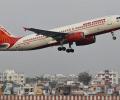
The timeline for disinvestment of Air India and Bharat Petroleum Corporation (BPCL) may be pushed by two to three months due to impact of the second Covid-19 wave. However, the government is confident of wrapping up the sale of the two companies by FY22 and meeting the disinvestment target of Rs 1.75 trillion. This will be achieved by sale of government stake in core and non-core public sector undertakings (PSUs).

According to government data, the Centre procured only 35,179 ventilators out of the 50,000 originally ordered.

While the record shipments reflects the prevailing mood at the time, the exponential rise in Covid cases in the country has turned the tide since.

The fairy tale turnaround story has, however, taken a few knocks after a second wave of the pandemic has brought a series of default notices and has posed the toughest test for the 55-year old Singh to save the airline he founded and sold to the Marans only to assume control later.

From trucks lined up and waiting in the area to local vendors, the scenes tell a story of livelihoods stalled.

The new iMac, two iPads and iPhone 12 and 12 Mini will be open for ordering starting April 30, just like in the US, the UK, China and Japan.

The company will utilise this time to carry out maintenance work at its manufacturing plants.

Booked between 2007 and 2011, out of the total 32,700 residential units under various Jaypee Infratech (JIL) projects, at least 20,000 homes are yet to be delivered. Supreme Court documents show that, till last March, Jaypee had issued 7,997 offers of possession to homebuyers while executing only 6,530 sub-lease deeds. These deeds offer homebuyers possession rights but, unlike registration, does not guarantee absolute ownership.

Within two weeks of many airlines deciding to roll back salary cuts encouraged by a steady increase in traffic flow, a second wave of coronavirus along with rules of compulsory RT-PCR test has hit forward bookings. The fears of last summer, when the pandemic had overturned all the wisdom of airline boardrooms, have returned to haunt the aviation industry. According to an official in the Ministry of Civil Aviation, flight occupancy is down to 60 per cent from 70 per cent in the first week of March. Airline lobby group IATA estimates that low cost airlines need to fly at 80 per cent occupancy to be profitable.

Adani Airports is planning to centre its airport business around Mumbai and Ahmedabad by developing them as gateway airports, feeding them with traffic from other airports in the company's portfolio. The Ahmedabad-based conglomerate - with investments in logistics, transportation, utilities and energy - intends to spend Rs 35,000 crore in the airport business in the next five years. This forms the bulk of the conglomerate's total capex of Rs 50,000 crore. According to a presentation given by the company in an investor call with Bank of America, gateway airports of Mumbai and Ahmedabad will be connected with the feeder airports of Lucknow, Guwahati, Trivandrum, Jaipur and Mangalore.

India's Rs 4.5-trillion fast-moving consumer goods (FMCG) sector was one of the first to bounce back from the lockdown induced blues, reporting a year-on-year (YoY) growth in the October-December quarter last year. That said, the overall consumption figures continue to remain depressed. The FMCG market, which includes daily consumables like branded atta, hand sanitizers, edible oils, shampoos, razors, and so on, recorded 7.3 per cent value growth during the period, while the smartphone market grew by 21 per cent.
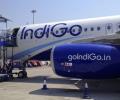
IndiGo has proposed to issue 185,000 shares worth to Chief Executive and Whole-time Director Ronojoy Dutta under the company's Employee Stock Option Plan (ESOP). The shares that can be exercised at a price of Rs 765 apiece is worth Rs 14,15,25,000. Dutta can exercise 25 per cent of that at the end of first year, 35 per cent at the end of second year, and the remaining in December 2023 when his current tenure ends.

'The government has assured us support.' 'The civil aviation ministry have told us that whatever we need, we will get prime airport slots and bilateral rights.'

On a busy corporate route like Delhi-Mumbai, hand luggage fare can be cheaper by at least Rs 500-Rs 800.

Foreign investment firms, especially private equity, are jittery about the Indian market as uncertainty continues to shroud the energy sector.

Apart from bringing new suppliers on board, Xiaomi is also hoping to take advantage of the newly launched PLI scheme that offers incentives on incremental production of smartphones with 2020 as the base year.

Ruia, a chartered accountant whose business ranged from sugar to textiles and heavy engineering to tyres, refused to comment on queries about his interest in Air India.

Expansion of distribution network, venturing into new markets, supplementing production capacity, and ramping up workforce are all on the cards. Instead of trying to fight with brands having massive war chests, it will pass on the benefits to consumers by offering them phones at lower prices.

The Army signed a $20-million deal with the Infosys-backed drone maker recently.

Even if 5G is not launched by operators this year, the handsets market will certainly witness a strong supply ecosystem for 5G ready smartphones in 2021.
 © 2025 Rediff.com - Investor Information - Advertise with us - Disclaimer - Privacy Policy - Sitemap - Feedback - About us - Terms of use - Grievances